
The Hidden Truth About Your Basal Metabolic Rate
Discover how your Basal Metabolic Rate (BMR) is a critical factor in sustainable weight management. Learn to optimize your metabolic core with cutting-edge insights for lasting results.

Your metabolism is not a static number. It is a highly dynamic physiological engine that can be tuned, optimized, and mastered for longevity.
Understanding the Foundation: What is BMR?
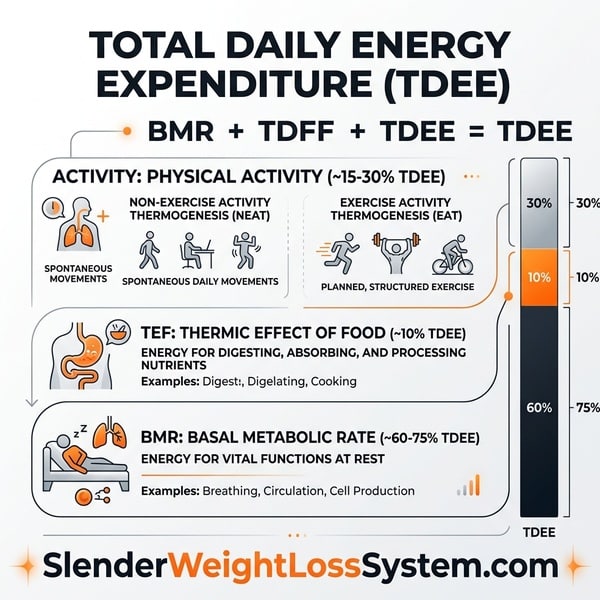
Your Basal Metabolic Rate (BMR) represents the absolute minimum number of calories your body requires to function at rest. This covers vital, unconscious processes like breathing, blood circulation, cellular production, and deep nutrient processing. If you were to stay entirely motionless in bed all day, your BMR dictates the core energy your body consumes just to stay alive.
Understanding the distinction between metabolic metrics is paramount. While TDEE (Total Daily Energy Expenditure) is what we look at for creating a calorie deficit, your BMR remains the largest, most significant component of TDEE. In fact, it accounts for roughly 60-75% of your total daily burn.

The Evolution of BMR Calculation
The science of measuring metabolic output has evolved dramatically. While classic formulas like Harris-Benedict remain popular for their ease of use, they often fail to account for unique body compositions. Modern clinical standards lean toward the Katch-McArdle formula, which places a heavy, necessary emphasis on lean body mass.
For those seeking peak precision, methods such as indirect calorimetry and Bioelectrical Impedance Analysis provide granular insights into one's metabolic health. According to historical physiological research published in scholarly medical journals, resting metabolism is profoundly influenced by body composition and cellular activity.
If you are exploring our systems, understanding your slenderiiz ingredients and how they interact with your foundational metabolism is the first step toward lasting vitality.
Dynamic Influence Factors on BMR
Your BMR isn't a fixed destiny. Several dynamic factors deeply influence whether your engine runs hot or slow. By supporting your body with a premium advantage supplement and making strategic lifestyle adjustments, you can positively shift this baseline.
- Muscle Mass vs. Adipose Tissue: Muscle is significantly more metabolically active than fat. Increasing your lean mass directly elevates your resting energy burn around the clock.
- Age and Hormonal Regulation: While BMR naturally decreases with age, optimizing key hormones (like Leptin and Ghrelin) acts as the biological thermostat for your hunger and metabolic efficiency.
- Genetics and Epigenetics: Your baseline is inherited, but your lifestyle choices act as epigenetic switches, dictating how your body processes and stores energy.
Strategic Optimization Protocols
Nutrition strategies play a critical role in metabolic output. You can leverage the high Thermic Effect of Food (TEF) by optimizing protein intake. Furthermore, maintaining proper micronutrient status supports healthy thyroid function, while adequate hydration can temporarily boost your metabolic rate.
Exercise regimens must focus on building the lean mass that burns fat while you sleep. Combining resistance training with High-Intensity Interval Training (HIIT) maximizes the "afterburn effect" (EPOC), ensuring your metabolic engine runs at full capacity long after your workout ends.
Frequently Asked Questions
Does a higher BMR mean I will lose weight faster?
Yes. A higher BMR creates a larger passive calorie burn. This makes it significantly easier to achieve a caloric deficit without drastically reducing your daily food intake.
Can I actually change my BMR?
Absolutely. By focusing on resistance training to build lean muscle mass and maintaining consistent physical activity, you can naturally increase your metabolic floor over time.
Are online BMR calculators accurate?
They are excellent estimates but lack individual nuance. For high-precision planning, professional clinical assessments that account for lean body mass are recommended.
How does stress affect my metabolic rate?
Chronic stress increases cortisol levels, which can lead to metabolic slowdown, muscle breakdown, and an unfortunate increase in visceral fat storage. Managing stress is critical for metabolic health.