Why "Calories In, Calories Out" Stops Working After 30
Discover the real biological reasons why the old rules of weight loss break down, and how to finally bypass the metabolic plateau.

You hit your 30s, and suddenly the old rules stop applying. The quick detoxes, the skipped lunches, the extra hours on the treadmill: none of it moves the scale the way it did five years ago. You are eating the exact same way, yet you are dealing with unexplained age-related weight gain.
It is exhausting. And worse, it makes you feel like you are failing. But you MUST understand this: you are not failing; your biology has simply shifted. The classic "Calories In, Calories Out" (CICO) math equation is fundamentally flawed because it ignores the massive hormonal and cellular changes happening beneath the surface.
The "Calories In, Calories Out" Myth Exposed
For decades, we have been told that weight loss is a simple math problem. Burn more than you consume, and you lose weight. While the laws of thermodynamics still exist, the variables in that equation drastically change as we age.

Why Your Basal Metabolic Rate (BMR) Isn't Actually Broken
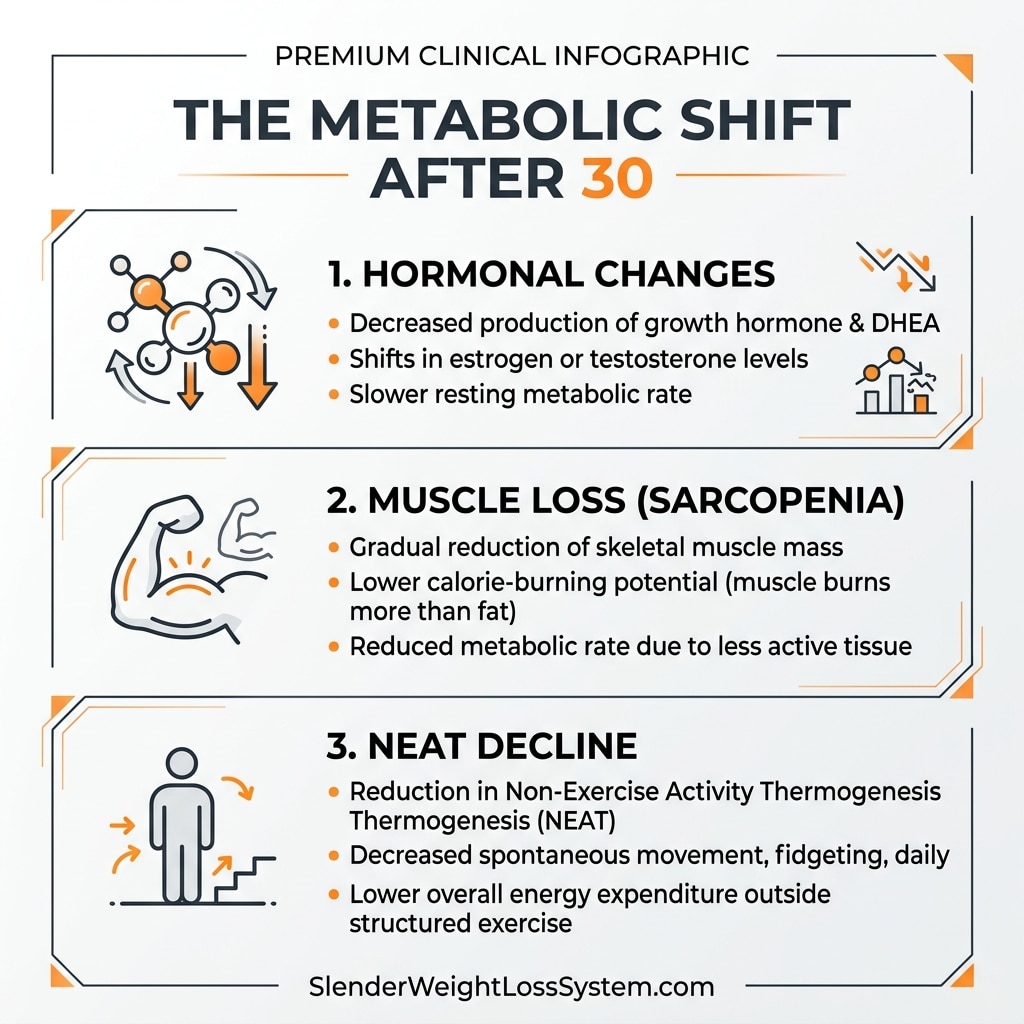
A common misconception is that your basal metabolic rate (the energy your body burns just to keep you alive) crashes the moment you turn 30. Interestingly, our research and recent scientific consensus reveal that your BMR remains relatively stable through middle age. The real issue is metabolic slowdown caused by entirely different factors.
The Silent Decline of NEAT
The biggest hidden factor in your calorie deficit plateau is Non-Exercise Activity Thermogenesis (NEAT). This is the energy you burn doing everything except formal exercise: walking to the subway, fidgeting, carrying groceries. In your 20s, your lifestyle was likely much more dynamic. In your 30s, career demands, commuting, and family responsibilities often force a more sedentary lifestyle. Your resting energy expenditure hasn't broken; your daily background movement has simply vanished.
The Real Culprits: Hormones, Stress, and Sarcopenia
If we can't blame a broken BMR, what is actually causing the scale to stick? The answer lies in the physiological transition into our 30s.
How Cortisol and Insulin Change Where You Store Fat
Life gets stressful in your 30s. Chronic stress leads to elevated cortisol levels, which in turn spikes insulin. This dangerous hormonal metabolism loop tells your body to stop burning fat and start storing it, specifically around your midsection. No amount of calorie restriction can override a body that is biologically locked into "storage mode" due to stress.
"You cannot simply exercise your way out of a fundamental hormonal shift. You have to optimize the underlying biology."
The Muscle Loss Equation (Sarcopenia)
Starting in our 30s, we begin to naturally lose muscle mass (a process called sarcopenia) if we aren't actively fighting it. Because muscle tissue is highly metabolically active, losing it means your body burns fewer calories round-the-clock. This is why maintaining lean mass is non-negotiable for long-term weight management.
Why You Can't Just "Work Out Harder" to Fix It
Most advice tells you to just hit the gym harder or run longer. But when you are dealing with elevated cortisol, sleep deprivation, and a career, adding a grueling 2-hour workout to your day often creates more stress. This triggers adaptive thermogenesis, where your body actually slows down your metabolism to preserve energy, fighting against your grueling workouts.
This is exactly why struggling with weight requires a smarter approach, not just a harder one. You need targeted nutritional support to help preserve your lean muscle while you navigate these biological changes. Integrating purenourish power boost into your routine is a fantastic way to supply your body with the branched-chain amino acids (BCAAs) it needs to support muscle retention and combat fatigue, without adding heavy stress to your system.
Biological Optimization: The Missing Key
To break through this wall, you have to stop fighting the CICO math and start optimizing the biology behind it. The Slenderiiz System is designed precisely for this reality. Instead of relying on harsh stimulants or starvation diets, the Skinny Drops work to support natural metabolism, helping your body maintain equilibrium even when stress levels are high.
By supporting your body's natural processes, you can bypass the frustration of adaptive thermogenesis and finally start seeing the results that your hard work deserves. It is time to work with your body's new chemistry, not against it.
Frequently Asked Questions
Why did I suddenly gain weight at 30?
Sudden weight gain around 30 is rarely due to a crashed metabolism. It is typically a combination of declining NEAT (less daily movement), natural muscle loss (sarcopenia), and increased stress hormones like cortisol that encourage abdominal fat storage.
Can I speed my metabolism back up?
Yes, by focusing on biological optimization rather than just calorie restriction. Supporting your natural metabolism with proper hydration, stress management, strength training to rebuild muscle, and premium supplementation can help restore your metabolic vitality.
Does counting calories still work?
While a caloric deficit is necessary for weight loss, counting calories alone often fails after 30 because it ignores hormonal imbalances. If your body is highly stressed, it will resist burning fat regardless of the math.