
The Danger of Exhaustion: 5 Signs of a Sluggish Metabolism
Your body is constantly communicating with you. Learn to recognize the subtle, biological alarms that signal your metabolic engine is stalling (and how to reignite it naturally).

The Silent Alarm: Why Your Body is Slowing Down
We often think of a sluggish metabolism solely as the reason we can’t lose weight, reducing a complex biological system down to a simple calorie-burning furnace. But your metabolism is so much more than that. It is the master regulator of your cellular energy, your immune response, and your overall vitality.
When this system begins to stall, it doesn’t just stop burning fat. It sends out distress signals: subtle, systemic alarms that most people write off as "just getting older" or "being stressed out." If you are doing everything right but still feel fundamentally off-balance, your body is likely experiencing deep cellular toxicity or circadian disruption. Recognizing these signs is the first step toward reclaiming your metabolic health.
Unmasking the 5 Hidden Signs of Metabolic Dysfunction
Most mainstream health advice focuses entirely on the scale. But long before weight gain becomes an issue, your body will present these five hidden indicators of a slowing metabolic rate.
1. Unexplained and Persistent Fatigue
We aren’t just talking about being tired after a long day at the office. This is a profound, cellular fatigue that hits you like a wall, often mid-afternoon. When your metabolism is sluggish, your cells literally struggle to convert the food you eat into usable ATP (cellular energy). Instead of feeling energized after a meal, you feel lethargic and heavy, signaling a core inefficiency in your biological engine.
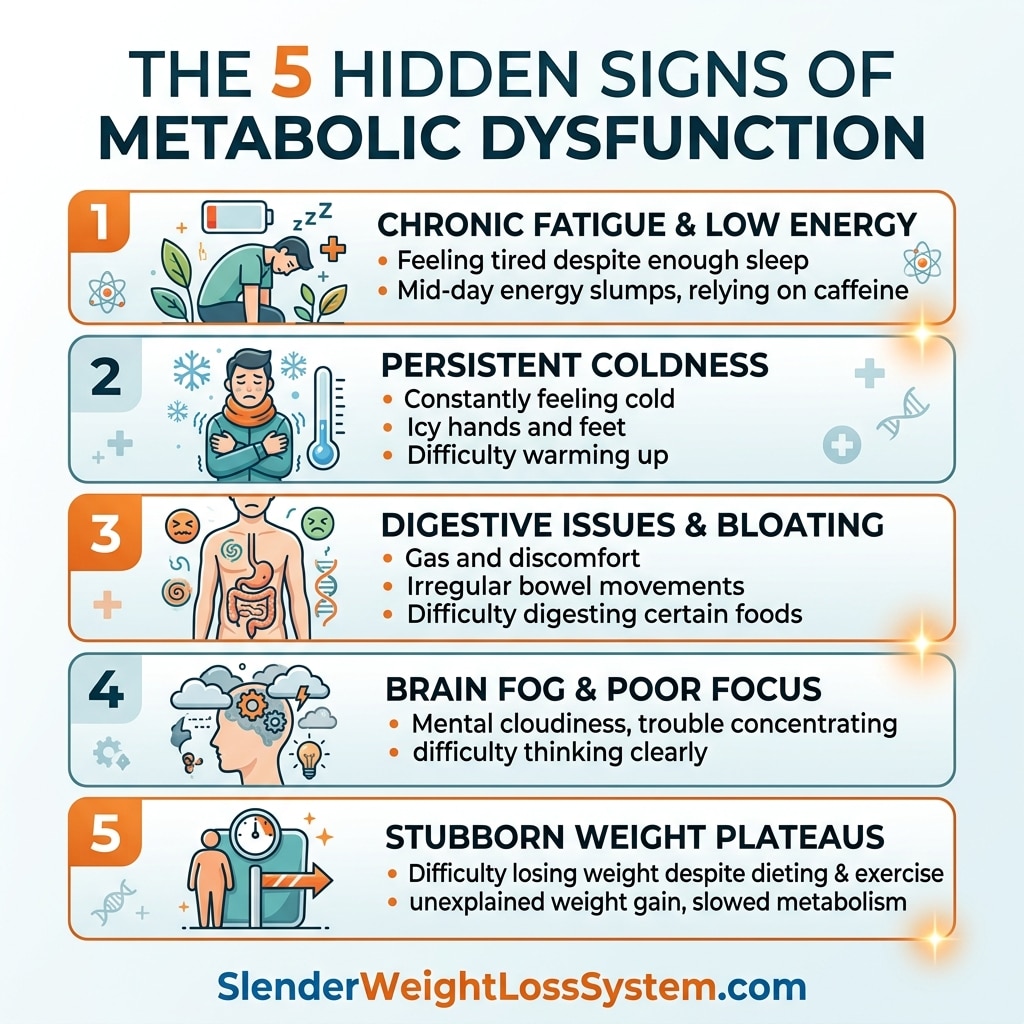
2. Constant Cold Sensitivity
Your metabolism is responsible for thermogenesis, which is the process of producing heat to maintain your core body temperature. If you find yourself constantly shivering, wrapping up in sweaters while others are comfortable, or suffering from chronically cold hands and feet, it is a glaring red flag. Your body is conserving energy by pulling heat away from your extremities to protect your vital organs, a direct result of a depressed metabolic rate.
3. Stubborn Weight That Refuses to Budge
Perhaps the most frustrating sign is the weight plateau. You may have slashed your calories and increased your cardio, but the scale remains frozen. This happens because a sluggish metabolism triggers adaptive thermogenesis, a well-documented survival mechanism researched by the National Institutes of Health where your body perceives calorie restriction as a threat and desperately holds onto every ounce of fat for survival. If you are over thirty, this is often why the traditional calories-in versus calories-out model stops working entirely.

4. Digestive Stagnation
Your digestive tract requires a massive amount of metabolic energy to function smoothly. When your metabolism slows down, so does your gut motility. This manifests as chronic bloating, constipation, and a feeling that food is just "sitting" in your stomach. A healthy metabolism requires a highly efficient digestive fire to break down and assimilate nutrients.
5. Mental Fog and Sluggish Cognition
Your brain consumes roughly 20% of your total resting metabolic energy. When your overall metabolic rate drops, your brain is often the first organ to feel the deficit. If you struggle with concentrating, remembering names, or finding the right words, it isn't necessarily a sign of cognitive decline. It is often a symptom of cellular energy starvation.
The Biological Root Causes (What is Actually Broken?)
If you are experiencing these signs, the worst thing you can do is aggressively cut more calories. You must address the root biological causes that are actively braking your metabolism.
Hormonal Imbalance and Cortisol Overload
Chronic modern stress keeps your body flooded with cortisol. Elevated cortisol levels actively suppress thyroid function (the master controller of your metabolism) and promote insulin resistance. This hormonal storm shifts your biology from a state of "energy expenditure" directly into a state of "fat storage and energy conservation."
"You cannot out-diet a hormonal imbalance. True metabolic recovery requires signaling to your body that it is safe to burn energy again."
Cellular Toxicity and Sarcopenia
Over time, environmental toxins, processed foods, and poor sleep lead to a buildup of cellular waste. This toxic load damages your mitochondria (the very powerhouses responsible for generating energy). Coupled with age-related muscle loss (sarcopenia), your body simply has fewer active "engines" burning fuel, leading to a profound metabolic slowdown.
Rebooting Your Biological Engine Naturally
Reversing metabolic dysfunction requires a holistic, bio-aligned approach. You must support your body's natural pathways of detoxification, hormonal balance, and cellular energy production. This is exactly where targeted, premium supplementation becomes a game-changer.
The slenderiiz program is specifically formulated to help your body manage these hidden metabolic blockers. By supporting natural hormone equilibrium and optimizing your body's innate thermogenic processes, you can begin to reactivate your resting calorie burn without relying on harsh stimulants.
Additionally, addressing your digestive stagnation is critical for metabolic recovery. Incorporating pure nourish into your daily routine provides your gut with highly digestible, plant-based proteins and enzymes, supporting a healthy digestive fire and ensuring your cells get the clean energy they desperately need.
Frequently Asked Questions
Can a slow metabolism make you feel cold?
Yes. A sluggish metabolism produces less body heat (thermogenesis), causing your body to conserve warmth for vital organs, which often results in chronically cold hands and feet.
Why am I so tired even when I sleep enough?
If your metabolism is dysfunctional, your cells struggle to convert food into ATP (energy). This leads to profound cellular fatigue, meaning you will feel exhausted regardless of how many hours you sleep.
How does stress affect my metabolic rate?
Chronic stress elevates cortisol, which suppresses thyroid function and increases insulin resistance. This hormonal shift signals your body to slow down calorie burning and store fat instead.